
Digital or analogue micro earpiece? What these labels really mean
Micro earpiece descriptions often use the words "digital" to promise clean sound without noise. It is worth knowing what lies behind them, because the label alone says little about quality.
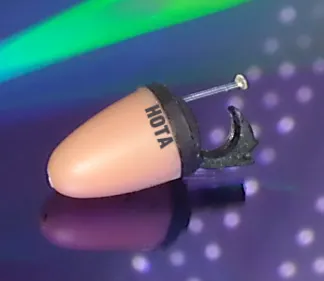
Sellers divide micro earpieces into magnetic, analogue and digital. The first distinction is technical and makes sense. The line between the other two is far more arbitrary.
What is digital and what is not
Let us follow the sound path in a typical kit:
- Phone → Bluetooth loop: digital transmission. Bluetooth sends sound as data.
- Loop → micro earpiece: analogue transmission. The loop produces a changing magnetic field shaped like the sound wave, and the earpiece picks it up. That is how induction works, whatever the box says.
- Inside the earpiece: an amplifier, which may be a simple analogue circuit or include digital signal processing such as filters and a volume limiter.
So when you read "digital micro earpiece", it usually means one of two things: a kit with a Bluetooth loop instead of a wired one, or an earpiece with a more modern amplifier that suppresses noise better. The transfer of sound from the loop to the ear itself stays analogue.
Does "digital" mean better?
Not always. The sound quality in your ear depends mainly on:
- the power and quality of the loop, since a stronger, cleaner field gives clearer sound,
- coil sensitivity and amplifier quality in the earpiece,
- the transducer, i.e. the miniature speaker,
- the loop position and distance from the ear,
- interference in the surroundings, which no label will fix.
A good earpiece with a simple amplifier and a strong loop will sound better than a "digital" earpiece with a weak unbranded loop.
The magnetic earpiece: a completely different design
Here the distinction really matters. A magnetic micro earpiece has no battery and no amplifier. It is a capsule with a magnet moved by the loop's field. It plays more quietly and needs a stronger loop, but it is the smallest and cheapest. Details in Types of micro earpiece.
What to look at instead of the label
- Is there volume control on the earpiece or the loop.
- Which battery and how long it runs on one cell.
- Is there a wax guard and can it be replaced.
- Which loop comes in the kit: Bluetooth or jack, with or without a microphone.
- Warranty and support: will someone help when the kit starts buzzing.
The full pre-purchase checklist is in How to choose a micro earpiece.
Where the noise comes from if "digital" was supposed to have none
Because the last stretch, from the loop to the ear, is inductive, the earpiece also picks up other magnetic fields nearby: from power supplies, transformers or wiring in the walls. That is a feature of the technology, not a fault of a particular model. How to deal with it is covered in Micro earpiece hissing, too quiet or silent.